
Historical Medieval Battle
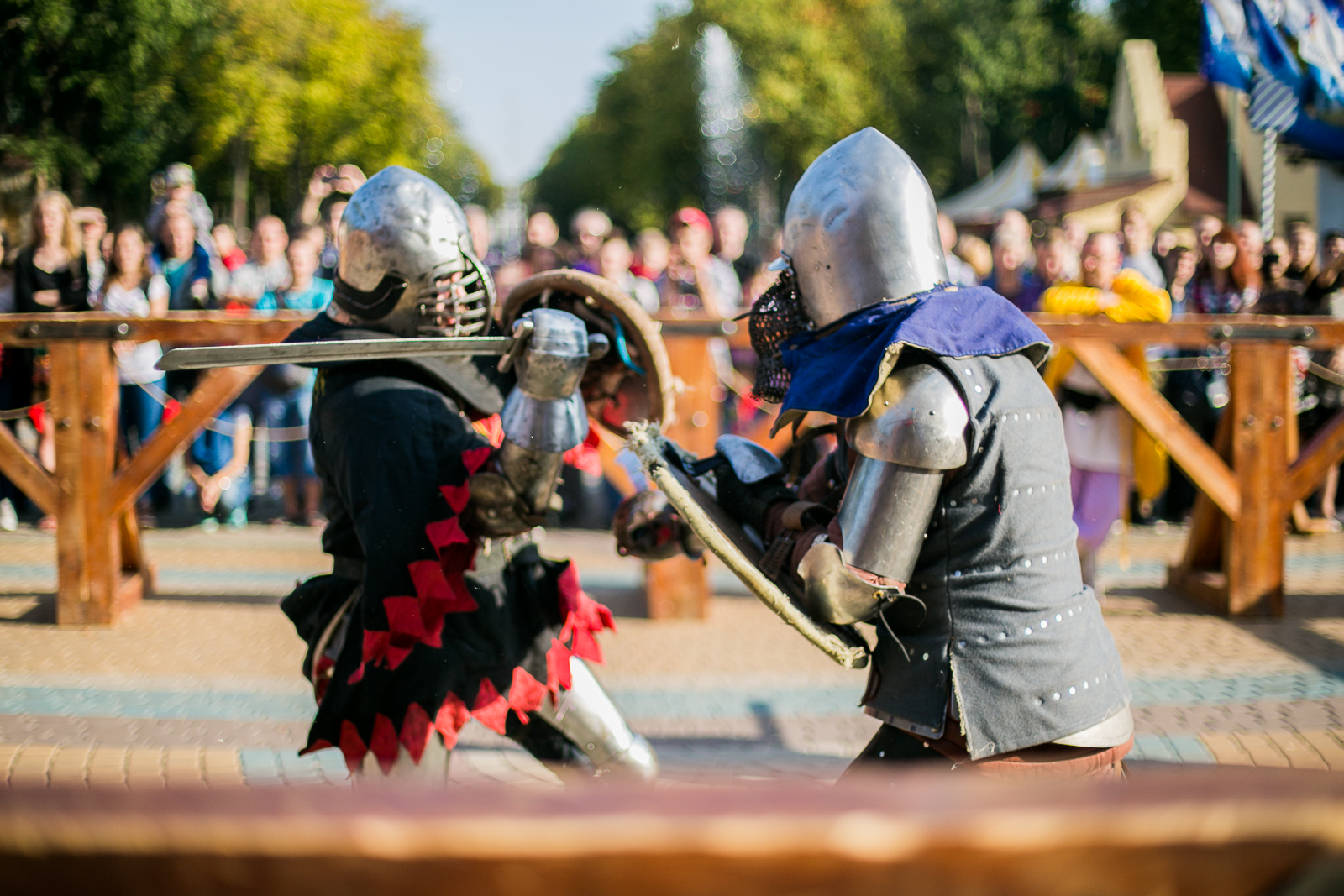 Historical Medieval Battle (HMB) is a relatively young modern sport — full-contact combat using the defensive and offensive equipment of the medieval period. HMB is full-contact fighting with blunted steel weapons. Fighters wear a complete set of armour; both the armour and the weapons are based on historical examples. Strikes are allowed to any part of the body (subject to rule limits), and both striking and grappling techniques are permitted.
Unlike the demonstration fights often staged at medieval reconstruction festivals, HMB bouts are full-contact and judged by sports referees with specialised training and personal fighting experience.
HMB is the sporting branch of medieval historical reconstruction. Matches between athletes are usually held at reconstruction festivals. For many years now, the flagship competition has been the «Battle of the Nations» — the world championship in Historical Medieval Battle.
The core idea of this side of reconstruction is twofold: on one hand, maximum competitive intensity for participants; on the other, the chance to test historical gear under conditions as close to real combat as possible. That is why fighters must use equipment that closely matches what genuinely existed in history.
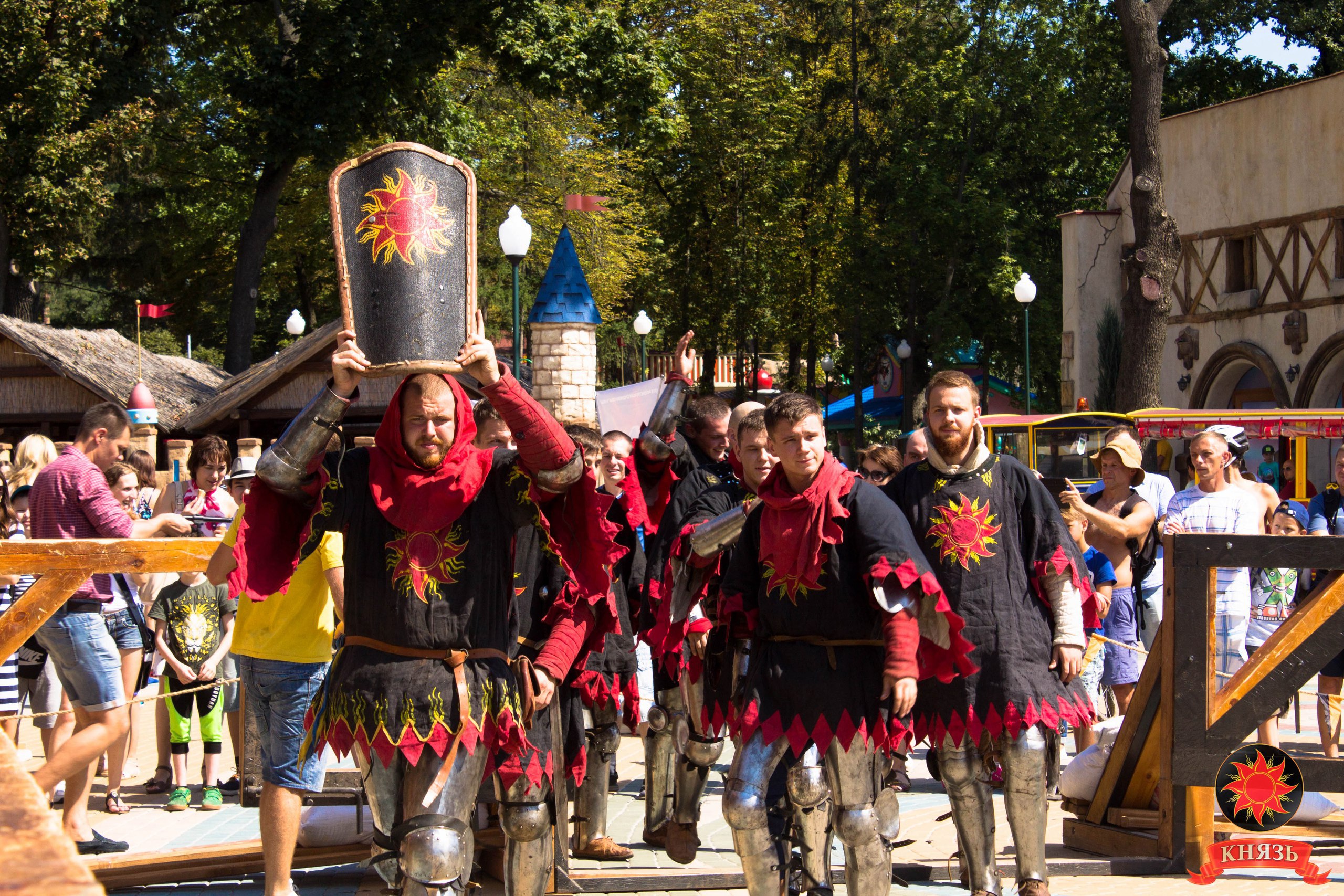 To reduce injuries, equipment is thoroughly inspected before fights, and weapons are blunted in advance.
Unlike historical fencing, HMB borrows heavily from modern combat sports — grappling is a core element, not merely permitted but essential.
Like any sport, HMB is divided into categories. Broadly, these split into individual and mass categories.
Individual categories
Individual categories — also known as «1 vs 1» fights — are further split into tournaments and professional bouts.
Tournaments (duels) are scored by hits — one opponent must land a set number of points (usually 10) on the other, or accumulate the most points within a fixed time (2–3 minutes). Tournaments are further divided into:
- «shield & sword» — fighters wield a shield and a sword
- «sword & buckler» — fighters wield a sword and a small round shield («buckler»)
- «sword vs sword» — each fighter has a single one-handed sword, no shield
- «longsword» — fighters use hand-and-a-half swords
- «non-standard» — weapons that don’t fit any standard category: halberds, two-handed axes, two-handed swords, and so on.
There is also a category called «triathlon»: three rounds with different weapons — first «longsword», then «sword & buckler», and finally «shield & sword».
 Professional fights
The second individual HMB category is professional fights. A bout is fought as «three rounds of three minutes». The rules permit any striking technique (except thrusts — thrusts are banned in HMB across all categories) to any part of the body, with the exception of the neck, back of the knee, groin, eyes, feet, and the back of the head when the opponent is bent over. Everything else, up to and including grappling (with up to 3 seconds on the ground in a clinch without active follow-through), is allowed.
Mass categories
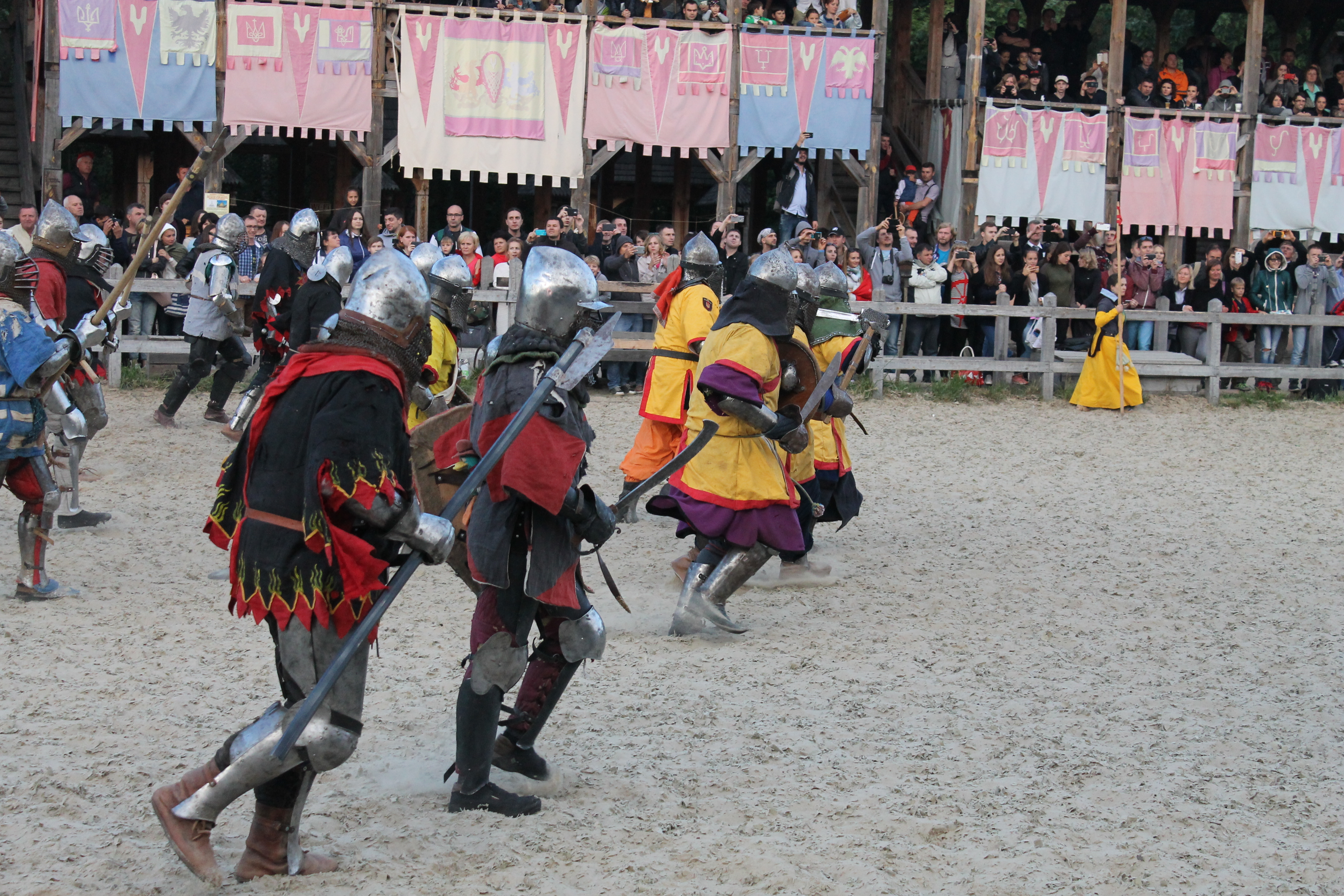
- «5 vs 5»
- «21 vs 21»
- buhurts (free-for-all)
Rules differ slightly in mass battles. Target areas are the same, but the winner is simply whoever is left standing — hits are not counted.
Beyond these categories there are others — «2 vs 2» (run as a free-for-all where several pairs of fighters meet on a single field; the winning pair is the one in which at least one fighter remains standing), «10 vs 10», and more. HMB categories are often created for specific festivals, taking into account their goals and any special historical requirements.