
Historical Reconstruction
What is historical reconstruction?
Broadly, 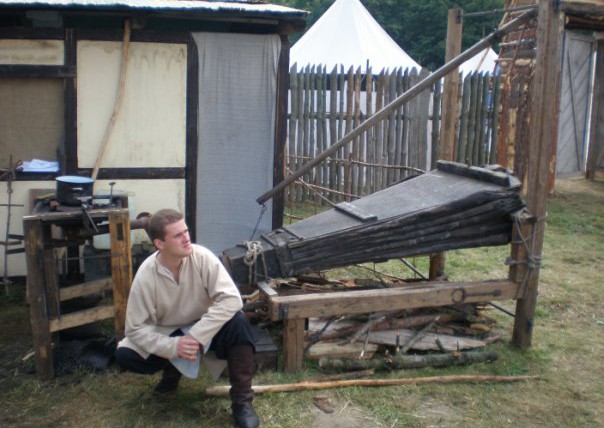 reconstruction means recreating events or objects of past eras, with an emphasis on material culture. Professional reconstructors typically study the history of technology — they analyse archaeological finds with the latest scientific methods to determine who made an object, when and how, and how that technology can be reproduced. Thor Heyerdahl with his papyrus boat Ra was a reconstructor in this sense. People like him uncover the secrets of Damascus-steel production, ancient ceramics, or Stone Age tools. Since the 1960s, ordinary enthusiasts have taken up something similar. The hobby became especially popular in Europe and on the East Coast of the United States — the birthplace of «living history», the practice of fully immersing oneself in a chosen historical period.
Historical reconstruction as a hobby is far less rigorous. The amateur reconstructor sets out to recreate the appearance of a person from a chosen era — from footwear and undergarments to weapons and the contents of a lady’s purse. Such a hobby naturally demands not only solid theoretical knowledge but considerable practical skill.
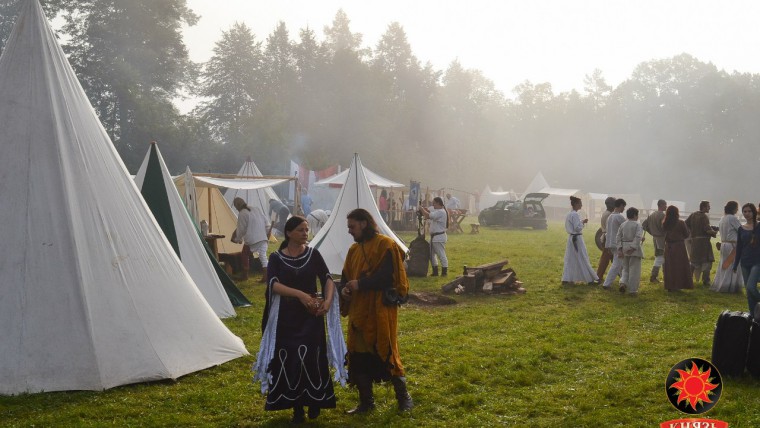 Amateurs and professionals of historical reconstruction
The depth of reconstruction can vary widely. Beginners typically settle for a general impression of a costume, without worrying too much about historical accuracy, fabric authenticity, or period-correct colour combinations. Those for whom historical reconstruction has become a genuine hobby take their gear far more seriously. A costume is usually built to a «passport» — a detailed dossier describing every element: the fabric, how it was dyed, the source of the cut pattern (drawn from archaeological finds, museum collections, and works of art), the kinds of hand- or machine-stitching used, and the approximate timeframe the outfit represents. «Passports» are reviewed by a panel; if the sources are reliable enough, the applicant is admitted to a historical reconstruction festival as a participant rather than a spectator.
While most reconstructors can sew their own clothing, more complex items in metal, leather, or fur are hard to make without specialised skills and equipment. Footwear, weapons and armour, belts and buckles are often bought from dedicated workshops or at festivals.
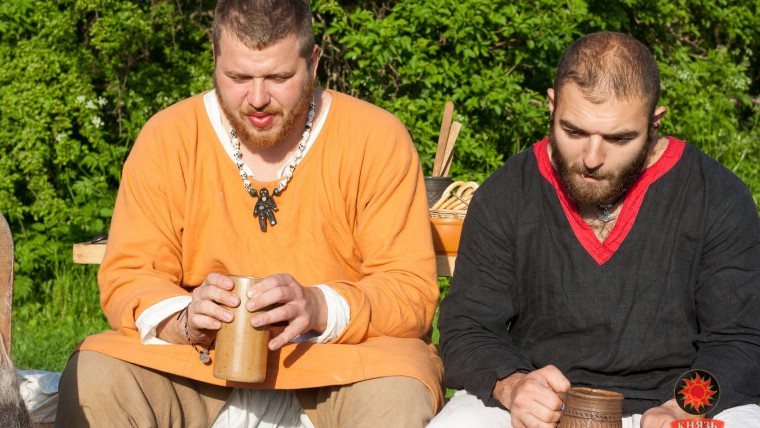 The most dedicated reconstructors come close to a professional level: for them, the look of an item matters less than perfect adherence to historical traditional technique. They spin and weave themselves, dye fabric with natural pigments, and use period-accurate needles and thimbles. At their events they recreate not just clothing but the everyday life of a chosen era — tents, dishware, musical instruments.
From Antiquity to the recent past: eras of reconstruction
The era chosen for reconstruction varies. While ancient and classical antiquity are represented in our region by only a handful of clubs, fans of the early and late Middle Ages are abundant. Approaches to reconstructing the early Middle Ages tend to be quite strict, leaning towards «deep» reconstruction. From the 13th century onward, and especially after the 15th, costumes become too elaborate to demand full period accuracy from most festival participants. The complexity of techniques and scarce materials are precisely why very few reconstruct the everyday life of the 16th–18th centuries. Some enthusiasts come close to professional level in recreating the Napoleonic wars and World War II — and here the requirements for historical accuracy tighten again significantly.
Of course, the historical reconstruction movement is not limited to costume — such a hobby alone would be dull. The huge variety of clubs is divided not only by era and depth of reconstruction but also by specialisation within the movement. Military-historical clubs put a strong emphasis on fitness and military history — their members are the ones who stage historical battles or knightly tournaments. Many groups perform medieval music or study period dance. Reconstructors hold a deep respect for craftspeople working with historical techniques: armourers using traditional forging, embroiderers, and furriers. Some delve into old sources looking for authentic recipes for food, drink, or cosmetics.